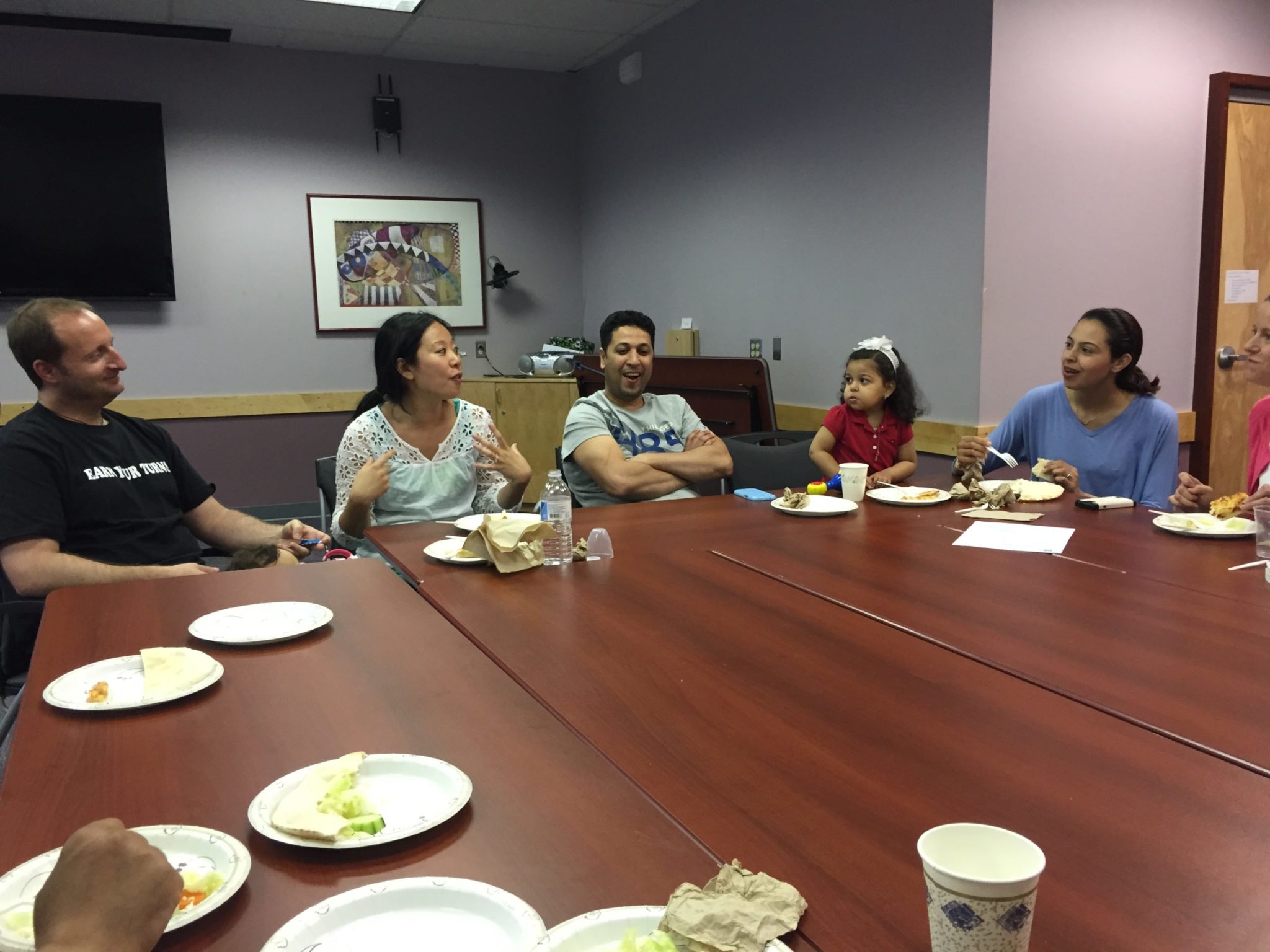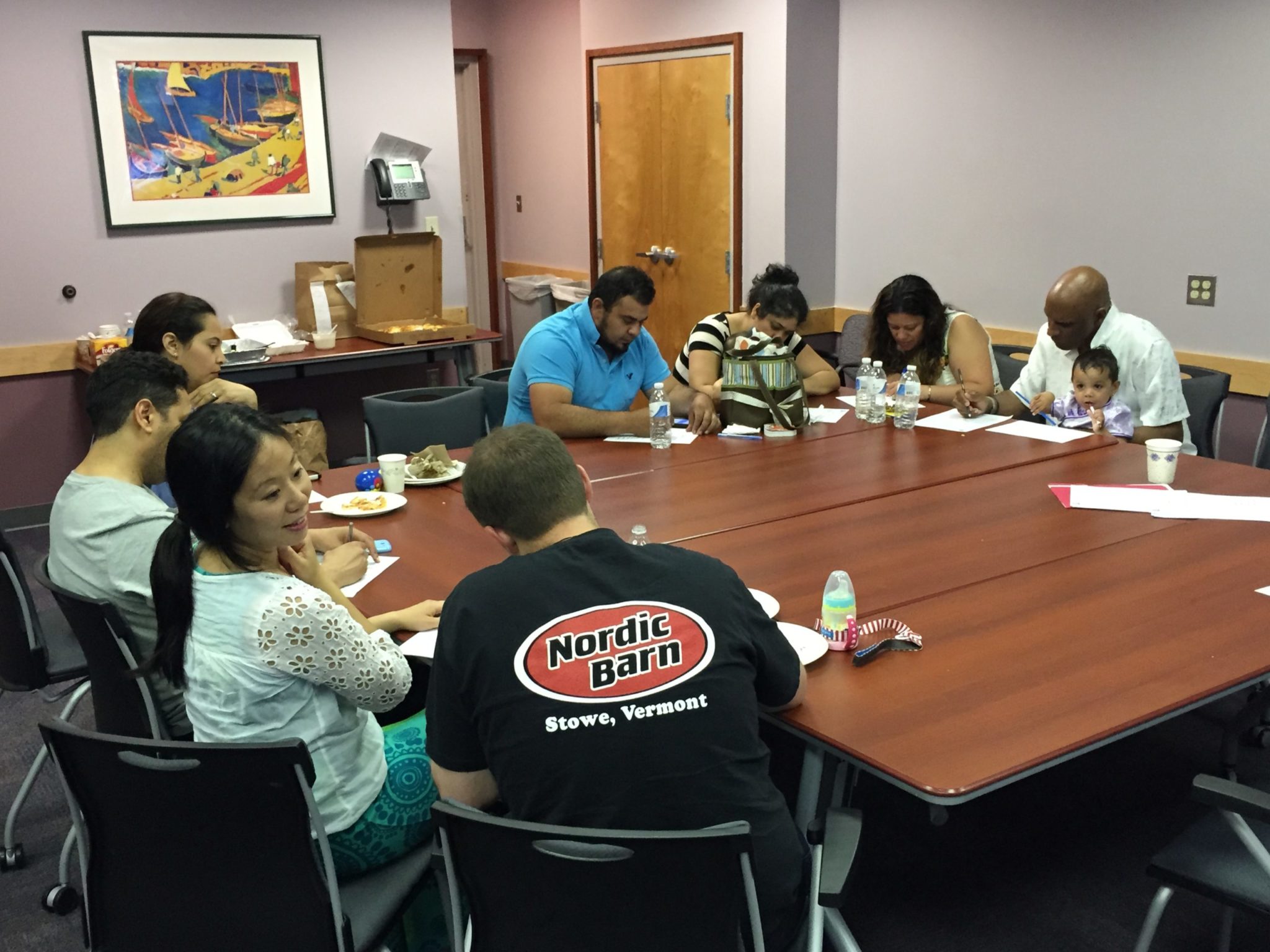



Last week, The Fatherhood Project and MGH Revere HealthCare Center hosted a Fathers and Families Evening Event as part of TFP’s ongoing Dads Matter Initiative. The evening began with all of the families seated around a table together sharing a meal while revealing their names and “something interesting about their family” to the rest of the group. After the meal, the children completed a drawing activity with MGH Revere staff Lindsay Dibona and Jen Brondson, while the parents participated in a facilitated co-parenting activity called “The Relationship Check-Up“. Below is an excerpt from this exercise. The full version can be downloaded here.
- Positive parenting qualities that I see in YOU are:
- Positive parenting qualities that I see in MYSELF are:
- One way I could strengthen our CO-PARENTING relationship is:
- One way YOU could strengthen our CO-PARENTING relationship is:
This activity was followed by a rich discussion about co-parenting strengths the parents see in each other, as well issues they agreed they need to improve upon. The purpose of this exercise is to illustrate the importance of communication between parents. No matter the relationship status of the co-parents (married, divorced, separated, etc.) it is vital that they maintain open lines of communication with one another in regards to parenting, and share a willingness to ask for help or offer suggestions from their parenting partner about their style of child rearing. This contributes to a healthy, positive family atmosphere.
The Fatherhood Project and our partners at MGH Revere have received positive feedback from the participants of our Dads Matter Initiative and their families. We are pleased that our program has had a positive impact on fathers and their children.
“Since he (the dad) started going to the Saturday Dads & Kids Activity Group, he has been much more attentive to our child’s needs…he’s tuned-in in a way he wasn’t before.” – Mom at the Fathers & Families Evening Event at MGH Revere